Why Problem-Solving and Decision-Making Skills Matter for Leaders
- Jan 29
- 2 min read
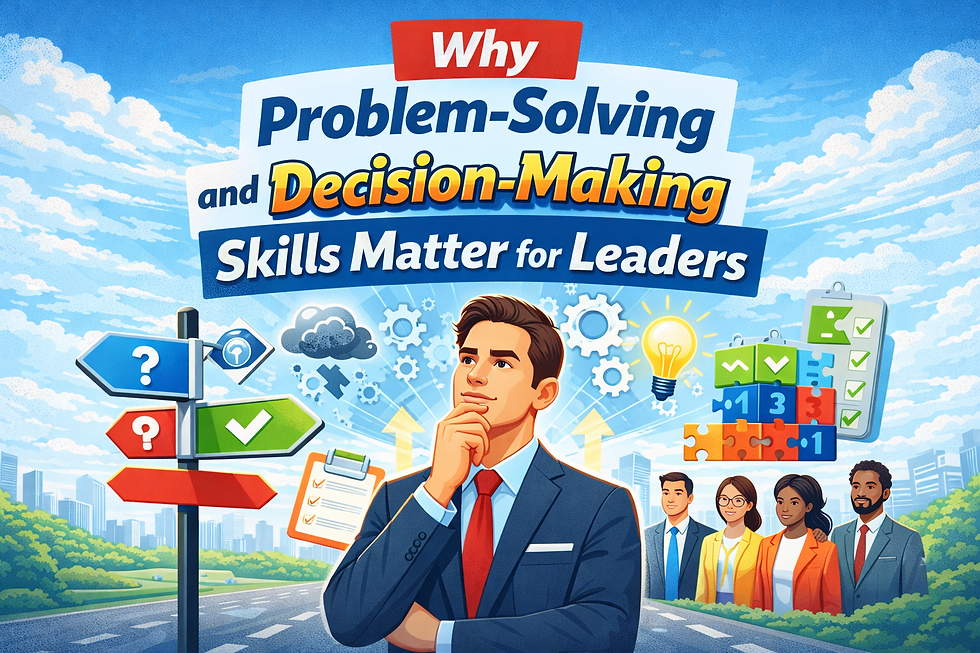
Technical expertise alone is no longer enough, for working professionals and senior-level executives. The real differentiator lies in strong problem-solving and decision-making skills. These skills influence not only individual performance but also team success, organizational growth, and long-term sustainability. This is why Problem-Solving skill training and Decision-Making skill programmes have become essential components of executive development courses.
Navigating Complexity and Uncertainty
Modern organizations operate in conditions of constant uncertainty, market volatility, digital disruption, regulatory changes, and evolving customer expectations. Senior executives are expected to make high-stakes decisions with incomplete information and under time pressure. Effective problem-solving skills help leaders break down complex situations, identify root causes, and evaluate multiple options objectively. Without structured decision-making abilities, leaders risk reactive choices that can lead to costly mistakes.
Impact on Business Performance
Strong decision-making directly affects business outcomes. Leaders who are trained in systematic problem-solving are better equipped to optimize resources, manage risks, and seize growth opportunities. A well-designed Decision-Making skill programme equips professionals with tools such as critical thinking frameworks, data-driven analysis, and scenario planning. These capabilities enable leaders to make informed decisions that align with organizational goals and deliver measurable results.
Leading Teams with Confidence
Senior-level executives are not just decision-makers; they are role models. Their approach to problem-solving sets the tone for the entire organization. Leaders who demonstrate clarity, logic, and fairness in decision-making foster trust and confidence within their teams. On the other hand, inconsistent or poorly thought-out decisions can lower morale and reduce productivity. This is why many leadership courses emphasize collaborative problem-solving and inclusive decision-making techniques that empower teams and encourage innovation.
Managing Risk and Accountability
With greater authority comes greater accountability. Poor decisions at the executive level can have far-reaching consequences, affecting brand reputation, employee engagement, and financial stability. Problem-Solving skill training helps professionals anticipate risks, evaluate trade-offs, and prepare contingency plans. It also encourages reflective thinking, learning from past decisions to continuously improve future outcomes.
Staying Relevant in a Competitive Landscape
As automation and artificial intelligence handle routine tasks, human judgment becomes even more valuable. Skills like strategic thinking, ethical decision-making, and creative problem-solving cannot be easily automated. Professionals who invest in advanced Decision-Making skill programmes position themselves as future-ready leaders, capable of handling complex human and business challenges that technology alone cannot solve.
Conclusion
For working professionals and senior executives, problem-solving and decision-making are not optional soft skills, they are core leadership competencies. Investing in structured Problem-Solving skill training, executive-level Decision-Making skill programmes, and leadership courses equips leaders to navigate complexity, inspire teams, and drive sustainable success. In a world where every decision counts, sharpening these skills is one of the smartest career investments a leader can make.


Comments